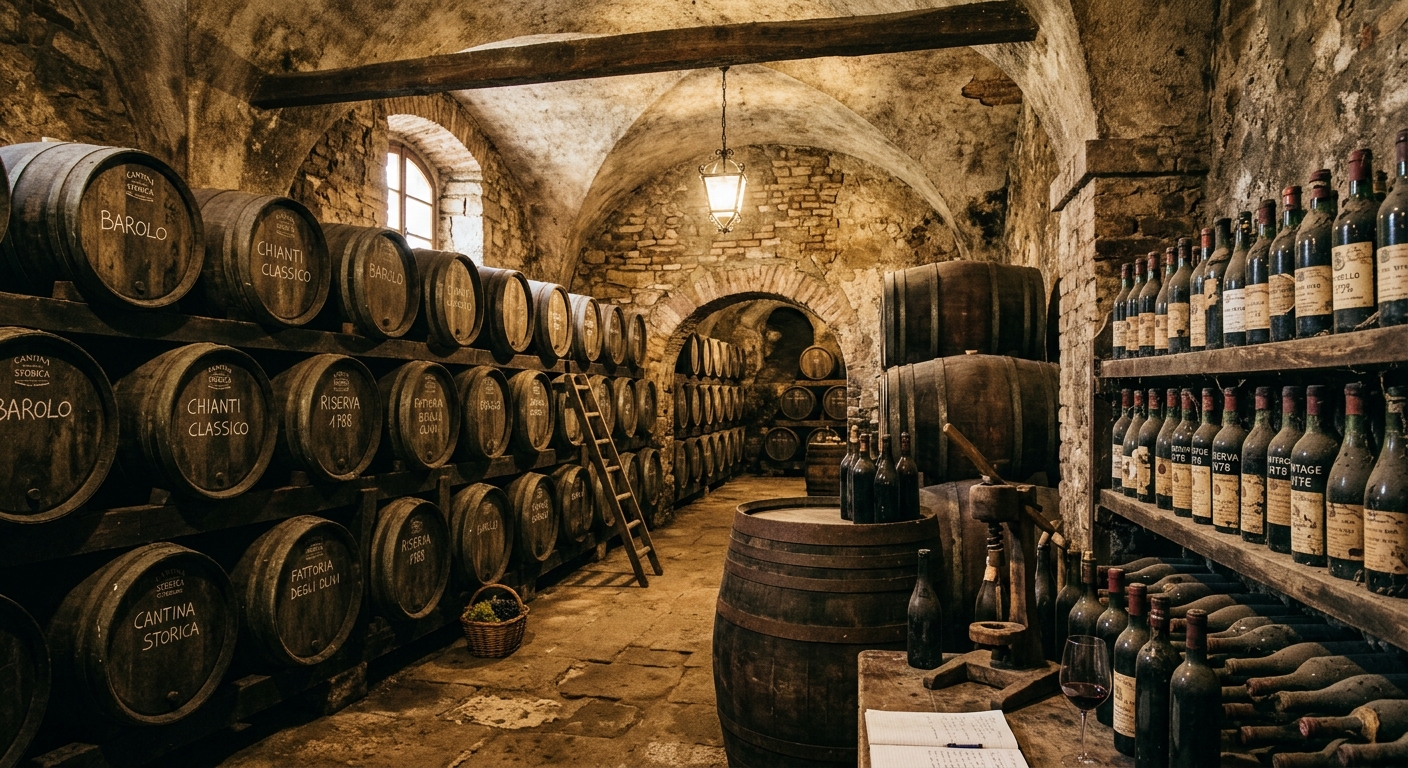
In the Italian wine industry, history is one of the most powerful stories a winery can tell. Many historic wineries build their identity around family heritage, generations of winemaking, and the continuity of tradition.
But one question remains:
Does a long family history always guarantee quality, passion, and authenticity?
The History of a Winery Is Valuable, But It Is Not Enough
A winery with one hundred or two hundred years of history owns an extraordinary heritage: vineyards, knowledge, territory, experience, and cultural identity.
Tradition is a great advantage, but it cannot replace daily commitment.
A generation can inherit a winery, but it cannot automatically inherit:
- passion for the vineyard;
- the pursuit of quality;
- the ability to innovate;
- respect for the land and the territory.
These values must be rebuilt every year, harvest after harvest.
When a Historic Winery Risks Living on Its Past Reputation
One of the risks for highly established wineries is relying mainly on the strength of their name.
Consumers are often influenced by history, reputation, and the prestige built over decades or centuries.
However, a great past does not automatically guarantee a great present.
A winery can have an extraordinary history while producing wines that no longer express the same character, dedication, or personality that originally made it famous.
Because in wine, the past creates value, but the present must prove it.
The Difference Between Inheriting a Winery and Deserving Its Legacy
Receiving a family winery means receiving a responsibility.
The best family-owned wineries are those where each new generation does not simply preserve what they inherited, but works to improve it.
A true heir is not simply someone who owns a valuable asset.
A true heir is someone who keeps alive the spirit, vision, and passion of those who built it.
Historic Wineries Acquired by Investment Funds and Large Groups: What Changes?
In recent years, many historic wineries have been acquired by industrial groups, investment companies, or financial organizations.
This does not automatically mean a decline in quality. In many cases, new ownership has brought important investments, modernization, international expansion, and stronger competitiveness.
However, it raises an important question.
When a winery continues to communicate a long family tradition, while ownership has changed, consumers should ask:
Am I buying a family story that is still alive, or mainly the value of a brand built in the past?
The answer is not always simple, but transparency becomes essential.
Can Young Wineries Without Centuries of History Produce Exceptional Wines?
Wine quality does not depend only on how long a winery has existed.
There are many young producers without centuries of family history who are creating remarkable wines through research, dedication, innovation, and a deep connection with their land.
A recently founded winery can offer a fresh perspective, new ideas, and a willingness to experiment.
Tradition matters, but it should never become a limitation.
True Heritage in Wine Is Not Only History, but Passion
In the end, the most important question is not:
"How many generations has this family been producing wine?"
The real question is:
"How much passion does this winery put into creating every bottle today?"
Because wine does not only tell the story of the past.
It tells the story of the people who produce it now.
Every harvest is a new challenge.
The land does not look at the producer’s surname.
It does not reward reputation alone.
It rewards knowledge, dedication, and sensitivity.
Tradition is a starting point.
Quality is something that must be earned every single year.
The true legacy of a historic winery is not simply the date written on a label.
It is the ability to continue deserving that history.
Cà Vendalis
www.cavendalis.com